

Introduction
Most B2B teams only rely on outbound to grow.
They build lists, send cold emails, run sequences, and hope for replies. It can work, but the response rates drop over time, trust is low at the first touchpoint, and every new campaign requires more effort to sustain results.
At the same time, buyer behavior has changed.
Before replying to a message or booking a call, people now check who you are. They look at your profile, read your content, and form an opinion before any conversation begins.
This shift has made inbound attention more valuable than outbound reach.
Why LinkedIn changes this equation
LinkedIn sits at the center of this change because it combines three things:
- Distribution
Your content is not limited to your followers. If it performs well, it reaches people outside your network. This allows someone with a small audience to consistently reach thousands of relevant users. - Context
Every user is tied to a role, a company, and an industry. When you write about a problem, the platform can show that content to people who actually deal with it. A post about hiring reaches founders. A post about sales reaches sales teams. - Intent
People are not scrolling LinkedIn casually. They are there to learn, stay informed, and evaluate ideas that help them do their work better.
This combination changes how growth works. By the time someone interacts with you, they already have context.
This is the shift from outbound to content-led GTM.
Traditionally, GTM only relied on cold email, calls, and paid ads. Today, content plays a central role.
LinkedIn should be treated as a system you operate.
A system where:
- content creates visibility
- visibility builds trust
- trust leads to conversations
- conversations turn into opportunities
Once you see LinkedIn this way, your approach changes. You stop posting randomly and start building something that compounds over time.
That is what makes LinkedIn the most effective B2B growth channel today.
LinkedIn as a Distribution System
LinkedIn does not show your post to all your followers.
It shows it to a small group first, then measures how they respond. If the response is strong, distribution expands. If not, it slows down.
This is why reach is not tied to audience size. It is tied to performance.
A smaller account can reach tens of thousands of people, while a larger one may struggle. The difference is how the content performs in the first stage.
That performance is driven by key signals. Some of them are:
- Early engagement measures how people interact with your post in the first window after publishing
- Dwell time measures how long they stay. If someone pauses, reads, or revisits, it signals that the content is worth attention.
- Relevance comes from consistency. LinkedIn learns what you post about and who engages with it, then matches your content with similar users.
These signals determine whether your post expands or stops.
Another shift is who drives distribution.
Company pages have limited reach. Individuals do not.
People engage with people. A person sharing insights will outperform a brand page repeating the same message.
This is why many companies grow through employees who create content. Each person builds their own audience, and together they expand overall reach.
A lot of creators then chase virality.
They try to produce one post that reaches a large audience. Even when it works, the effect is temporary.
Growth does not come from isolated spikes. It requires repeated systems.
When you post consistently around a clear topic:
- the platform understands your content better
- your audience knows what to expect
This creates authority. And over time, this compounds.
Each post strengthens how your content is distributed and how you are perceived.
- Reach becomes more stable
- Content travels further
- Audience growth requires less effort
LinkedIn Content Strategy System
Strong content comes from 3 inputs:
- internal knowledge
- market awareness
- performance feedback
Internal knowledge is your best source.
Your content already exists in conversations, workflows, and problems you solve repeatedly. The goal is to extract it.
Instead of broad brainstorming, focus on specifics:
- What problems do we solve often?
- What steps do we follow?
- What do client misunderstand?
These answers turn directly into content. For example, a sales workflow explained internally can become a post or a breakdown.
Market awareness refines these ideas.
Content competes for attention. You need to understand what already works.
Study high-performing posts:
- which topics repeat
- how ideas are structured
- what makes them engaging
Then break them down. And instead of copying, ask:
- what makes this clear?
- where is the specificity?
- why would someone save this?
For example:
“Cold outreach is not working” is vague.
“We sent 1,000 cold emails and got 8 replies” creates context and curiosity.
The difference is specificity.
Performance feedback closes the loop. Publishing is not the end. It is input for the next cycle.
Each week, review:
- which posts drive comments
- which were saved or shared
- which led to profile visits or conversations
LinkedIn Content Funnel Strategy
Each post serves a different purpose depending on the reader’s level of awareness.
To make this effective, content is structured into 3 stages:
1. Top of the Funnel (TOF)
At the top of the funnel, the reader is not looking for solutions.
They are scrolling and deciding what deserves attention.
Content here should be easy to engage with:
- stories
- observations
- strong opinions
For example, instead of explaining a system, you might describe a mistake and what is revealed.
The goal is recognition.
2. Middle of the Funnel (MOF)
Here, the reader is actively trying to understand how to solve a problem.
Content should provide structure:
- playbook
- breakdowns
- workflows
Instead of broad advice, show how something works step by step.
The goal is understanding.
3. Bottom of the Funnel (BOF)
At this stage, the reader is deciding what to do next. They are comparing approaches and looking for proof.
Content should reduce uncertainty:
- case studies
- demonstrations
- results
The goal is decisions.
Winning LinkedIn Content Formats
Format determines whether your content is consumed or skipped.
Two posts can carry the same idea, but the one that is easier to process will perform better. On LinkedIn, where attention is limited and scrolling is fast. format often decides if a post is read at all.
Observe your posts and others in your niche. Focus on outcomes.
Check for:
- which formats get the most likes and comments
- which ones are saved or shared
- which lead to profile visits
These signals indicate depth of engagement.
Once you know what works, the challenge is balance.
Some creators experiment constantly and never build momentum. Others repeat one format and stop improving.
A better approach is structured.
Focus most of your output on formats that already perform. Use a smaller portion to test variations.
For example:
- continue posting carousels if they perform well
- test short videos alongside them
Each format serves a different purpose.
- Text posts work for ideas, opinions, and short narratives
- Carousels break down concepts into steps
- Infographics simplify systems or comparisons into a single view
- GIFs and demos show processes in action, especially for products
- Videos combine explanation and demonstration for more complex ideas
LinkedIn Content Pipeline & Workflow System
One of the most difficult parts creators struggle with is execution.
They have moments of clarity, write a few strong posts, and then stop. Without structure, ideas get lost, drafts remain unfinished, and posting becomes irregular.
This leads to inconsistent output.
A content pipeline solves this by turning content into a repeatable process.
A pipeline is a sequence of stages that every piece of content moves through:
Idea → Draft → Review → Scheduled → Live
This entire workflow can be managed through a simple system.
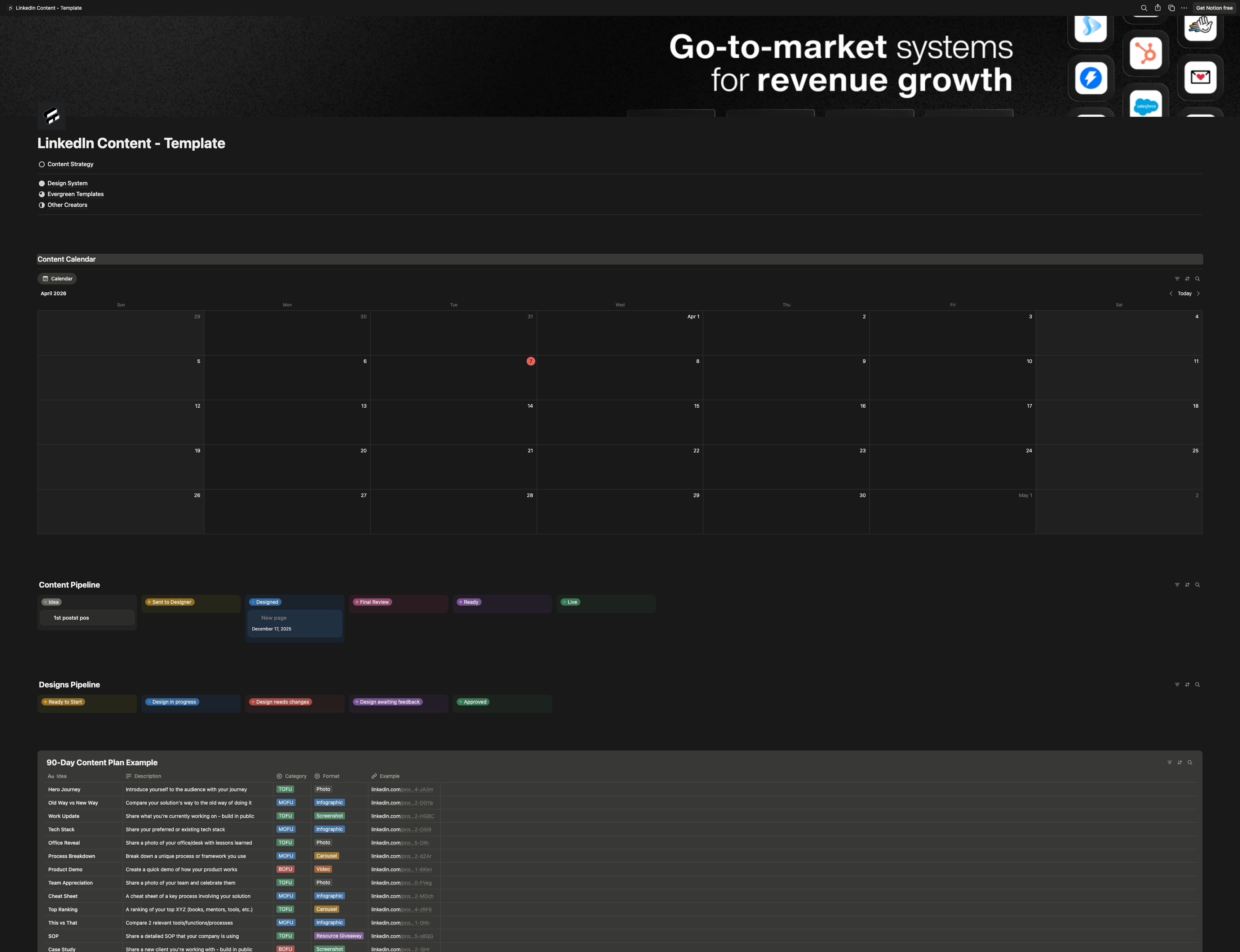
The Linkedin Notion Dashboard Template allows content to move through stages:
- Ideas are captured in one place
- Drafts are developed progressively
- Finished posts are queued
This removes friction. You always know what to work on next.
It also builds a reusable idea library.
One idea can evolve into:
- a text post
- a carousel
- a video
This increases output without needing new ideas each time.
LinkedIn Content Calendar & Consistency Engine
Posting cadence should be consistent. Most creators post 2-3 times per week.
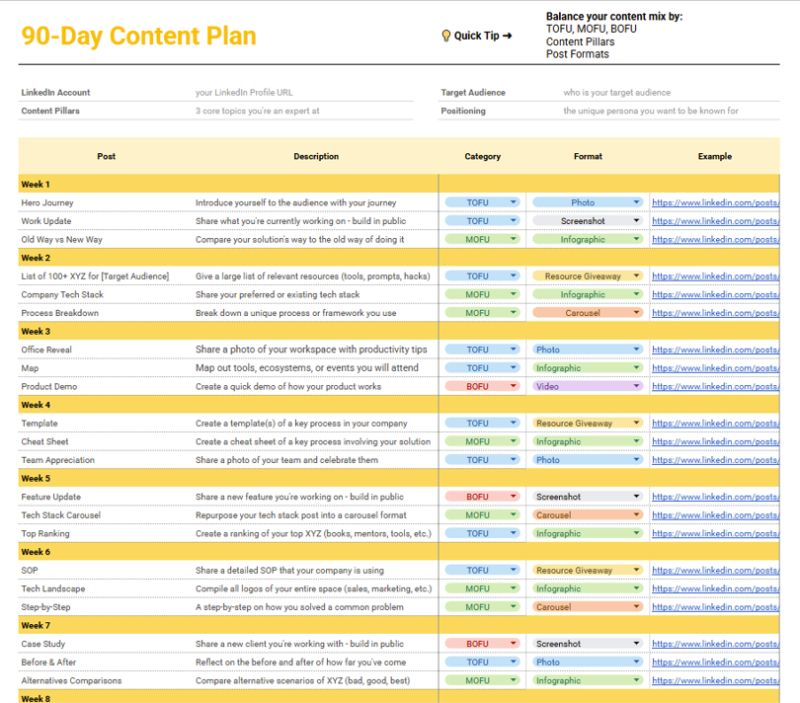
The 90-day content calendar with ~36 post ideas.
The purpose is to:
- balance content pillars
- test multiple formats
- move content from TOF to BOF
Over 90 days, you:
- identify what works
- build a set of repeatable formats
- develop a clear point of view
From there, you double down.
LinkedIn Profile Optimization
When someone reads your post and finds it useful, they visit your profile. At that point, a decision happens quickly:
- follow
- connect
- leave
Your profile should function as a landing page. It should clearly explain what you do, who you help, and why it matters.
A strong profile is built deliberately.
Each section should be reviewed, gaps identified, and updated with a clear purpose.
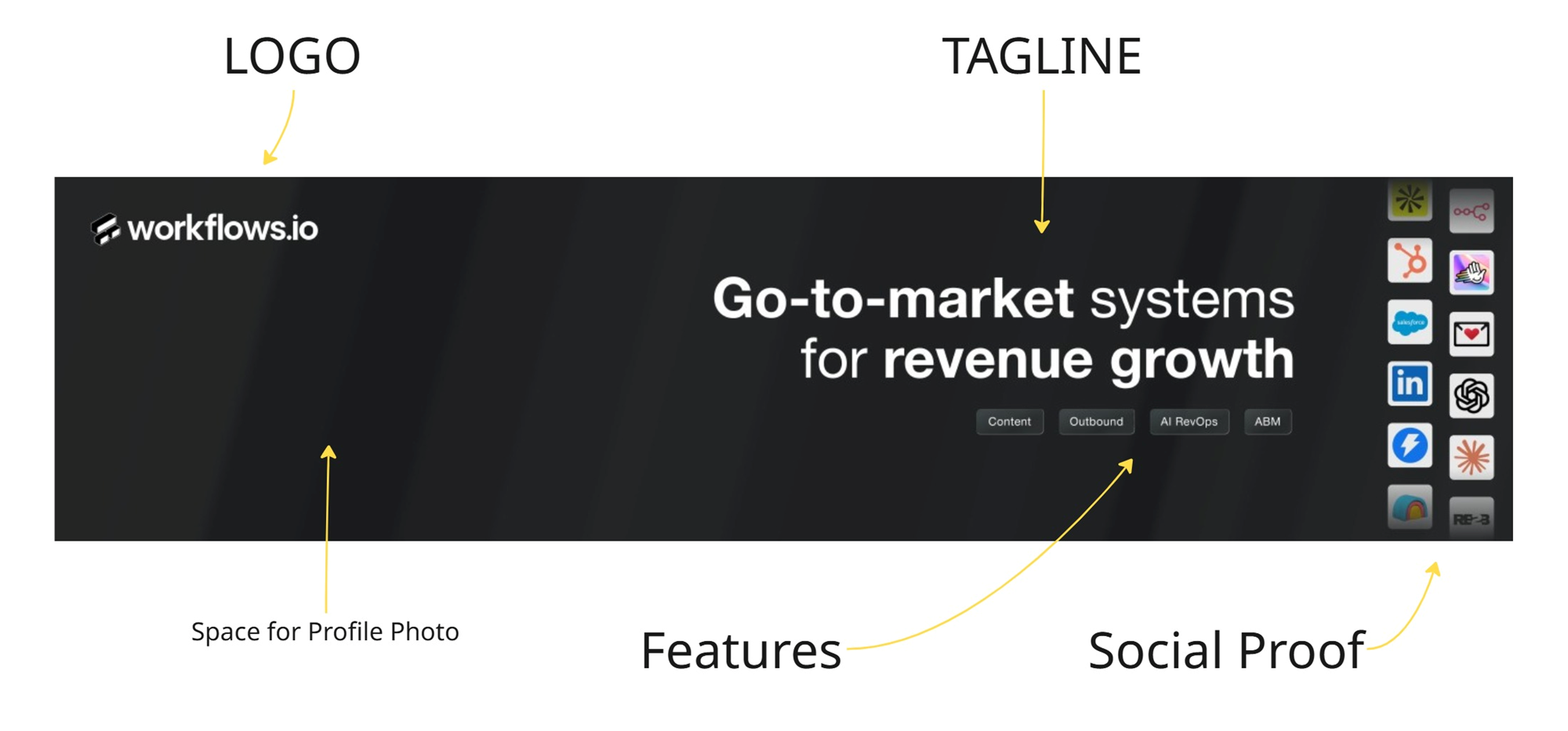
- Banner
The banner is the first visual.
It should communicate positioning at a glance. A strong banner includes:
- logo
- clear tagline
- social proof (results, clients)
- proper spacing
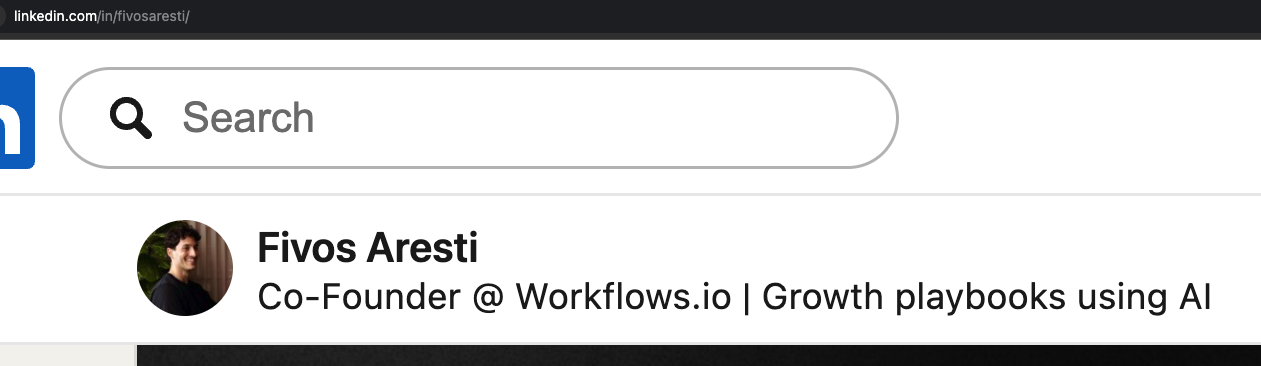
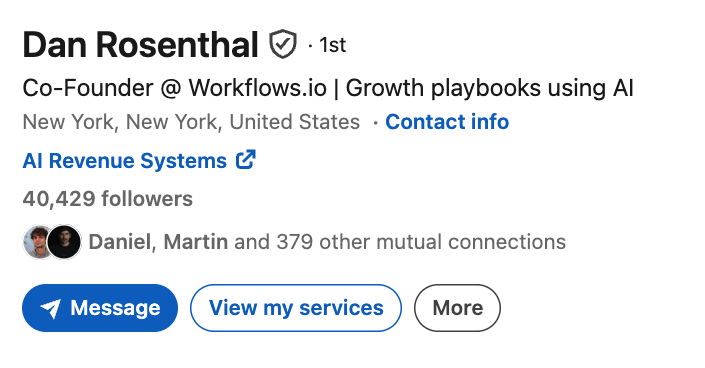
2. Headline
The headline sits below your name and sets context.
Use a simple structure:
Title @ Company | Value Proposition

3. Profile URL
The profile URL should be simple.
Keep it clean and easy to remember within LinkedIn’s character limit.
4. About Section
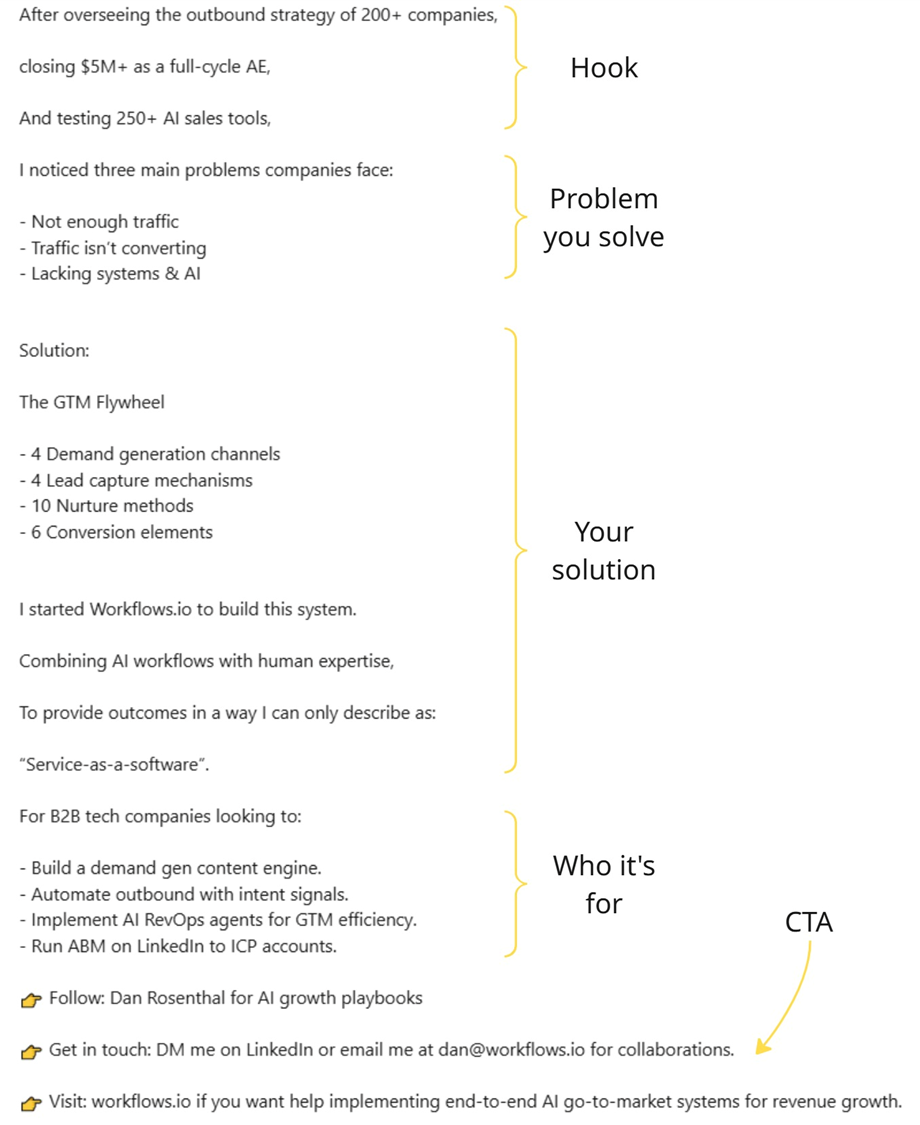
The About section should be structured, not written as a long paragraph.
Use this flow:
- hook with social proof
- problem you solve
- what you do
- who it is for
- clear call to action
5. Featured Section
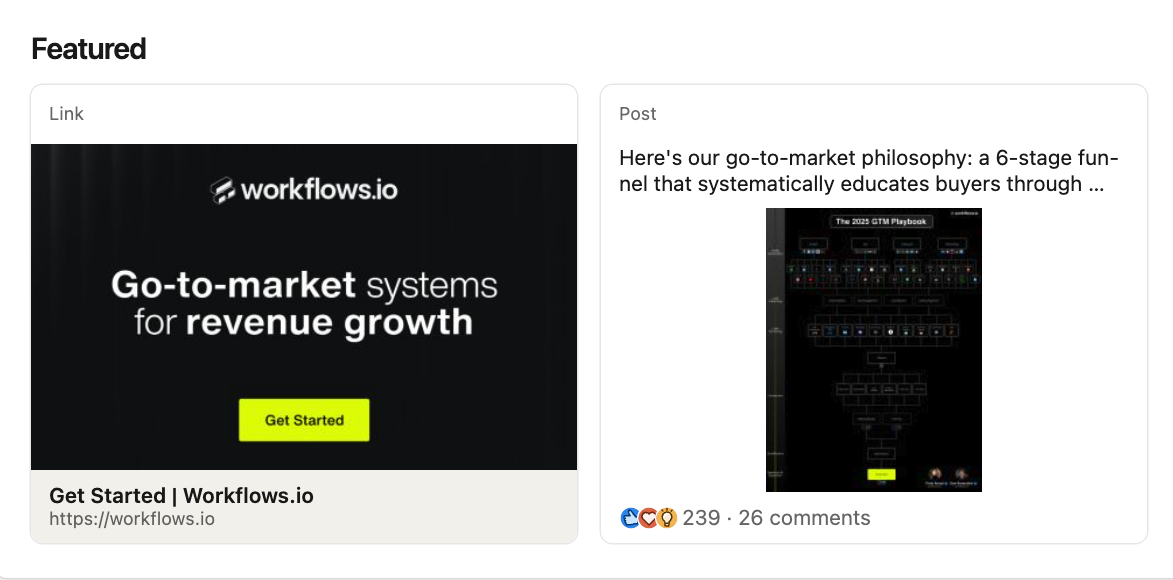
The Featured section directs action.
It should include:
- a primary link (website or “get started”)
- a lead magnet
- a strong post or resource
6. Experience Section
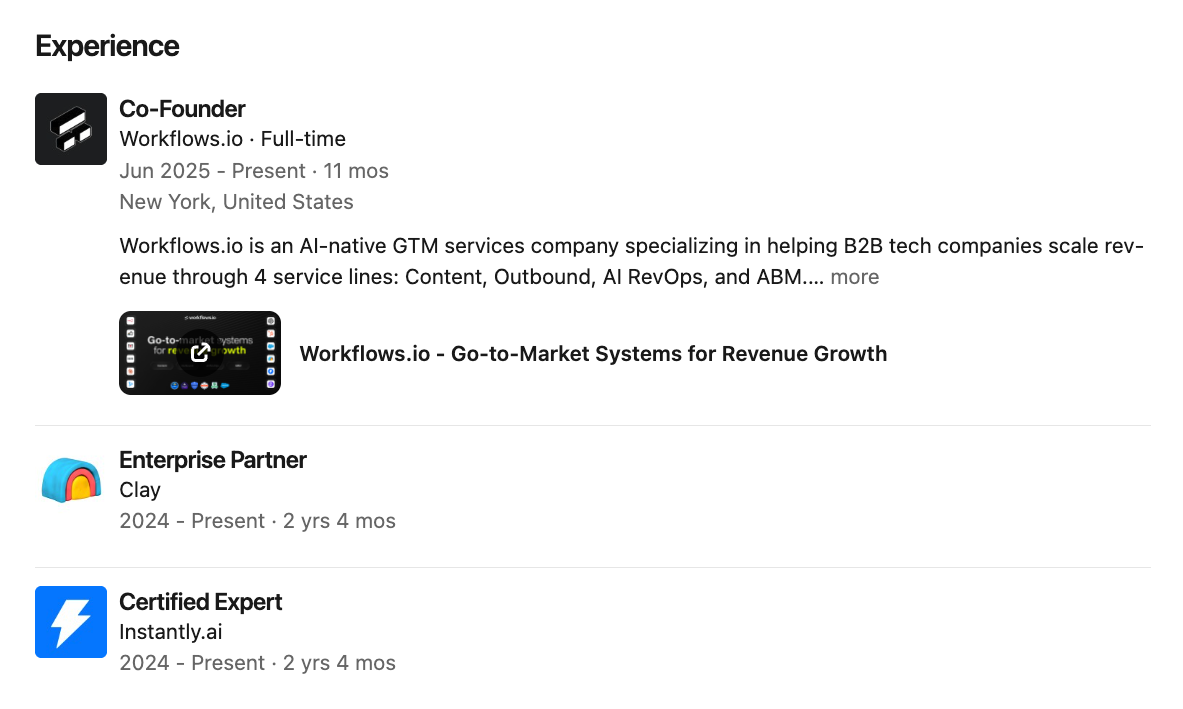
The Experience section should be concise.
Focus on:
- what you do
- what you offer
- where to learn more
7. Custom Button
The custom button should guide conversion.
“Visit my website” works in most cases. Other options depend on your goal.
Anatomy of a High-Performing LinkedIn Post
A LinkedIn post is judged in seconds.
People do not read immediately. They scan. They look at the visual and the first line, then decide whether to continue.
In practice:
- ~80% of the decision is visual
- ~20% is the opening line
If these do not work together, the post is ignored.
The hook is the entry point. It determines whether someone stops scrolling.
Strong hooks are clear, specific, and relevant.
Common patterns:
- Social proof
“We generated 40M impressions using this system” - Numbers
“3 changes that improved our response rate by 2x” - Relevance
“If your LinkedIn posts aren’t converting, this is why”
Keep it concise. Ideally under 55 characters.
Once the hook works, readability determines whether the post is consumed.
People scan, not read line by line.
To support this:
- use short lines
- break ideas into separate lines
- use bullet points where needed
Dense paragraphs reduce attention. Structured text increases it.
Tone determines connection.
Content performs better when it feels direct and personal.
Effective posts:
- speak to one person
- use simple language
- rely on “I,” “we,” and “you”
For example:
“If you’re struggling with consistency, this will help”
is stronger than a general statement.
LinkedIn Tech Stack
A strong LinkedIn system is not built on tools.
But the right tools make execution faster, more consistent, and easier to scale.
Here is the complete tech stack that can help you grow on LinkedIn.
Design
- Figma for carousels, templates, and reusable components
- Canva for quick visuals
- Adobe Creative Cloud for advanced design
- Miro for workflow mapping
- Screen Studio for videos and GIFs
Content Creation & Ideation
- Claude and Perplexity for research and structuring
- Favikon and Scripe for trends and content patterns
- MagicPost for drafting
- Grammarly for clarity
- Wispr Flow for capturing ideas
- Loom for recording thoughts
- Workflows.io Post Previewer for reviewing posts
Analytics
- Shield for post performance
- Favikon for creator insights
CRM & Organization
Signal Data
- Jungler for engagement signals
- Teamfluence for profile visitors
- Warmly and RB2B for website visitors
- Apify for data extraction
- Fibbler for additional signal tracking
Sales Enablement & Nurture
- Sybill for call insights
- Slack for internal workflows
- Ordinal for tracking
- beehiiv for newsletters and nurture
Conclusion
LinkedIn is about building distribution.
People treat content as something they do when they have time. That approach keeps results inconsistent.
The advantage comes from treating it as a system. When this is in place, growth stops being random.
It becomes predictable.
If you’re looking to build a similar content system, book a call with our team: getstarted.workflows.io
Explore our GTM workflows: workflows.io/workflows
Follow along as we share new GTM experiments and playbooks: newsletter.workflows.io