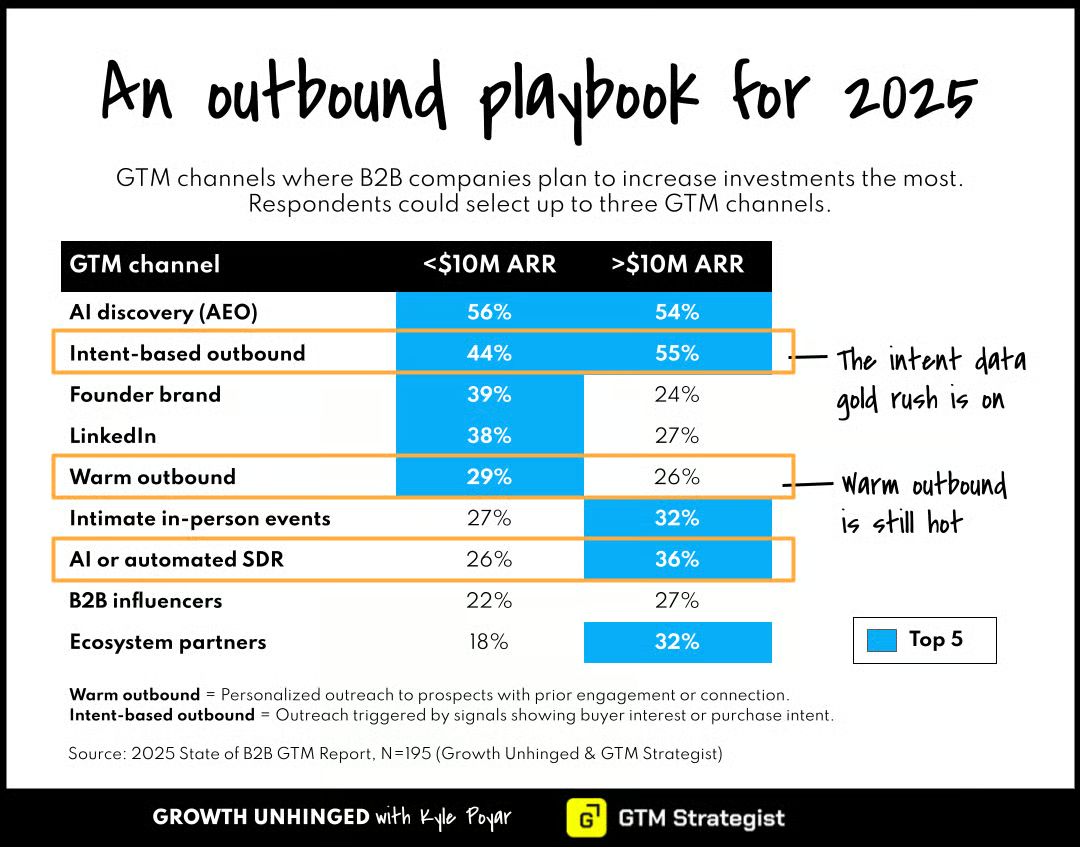


This outbound system builds on ideas originally shared by Kyle Poyar back in December.
You can read his original article here: An Outbound Playbook for 2025
While this framework isn’t new, it’s still highly relevant today. In fact, this is the exact approach we’re actively executing at Workflows.io.
Below, we break down how we’ve operationalized it, what’s working, and how it translates into a repeatable outbound engine.
Workflows.io reached $1M ARR just in three months after launch. By the end of Q1 2026, we expect to cross $2.5M ARR.
Most of our early pipeline came from LinkedIn content. Posting consistenly created inbound interest and brought qualified leads into our orbit.
But content has a structural limitation: you cannot control who books a meeting with you.
A founder at a company you would love to work with might never see your posts. Meanwhile someone outside your target market might book a meeting immediately.
Outbound solves this problem.
Instead of waiting for the right companies to discover you, outbound lets you decide exactly which companies to approach. With the right qualification model, you can prioritize accounts where your product is most likely to create value.
Ten years ago, outbound mostly meant manual prospecting, spreadsheets, and large SDR teams.
Today the conversation has swung to the opposite extreme: fully automated outbound powered by AI.
In practice, neither approach works well on its own.
Automation scales research and outreach. Humans still outperform automation when personalization and relationship-building matter.
The Pillars of Modern Outbound
Our outbound motion rests on 4 channels:
- Cold calling
- Email campaigns
- LinkedIn outreach
- Manual prospecting for high-value accounts
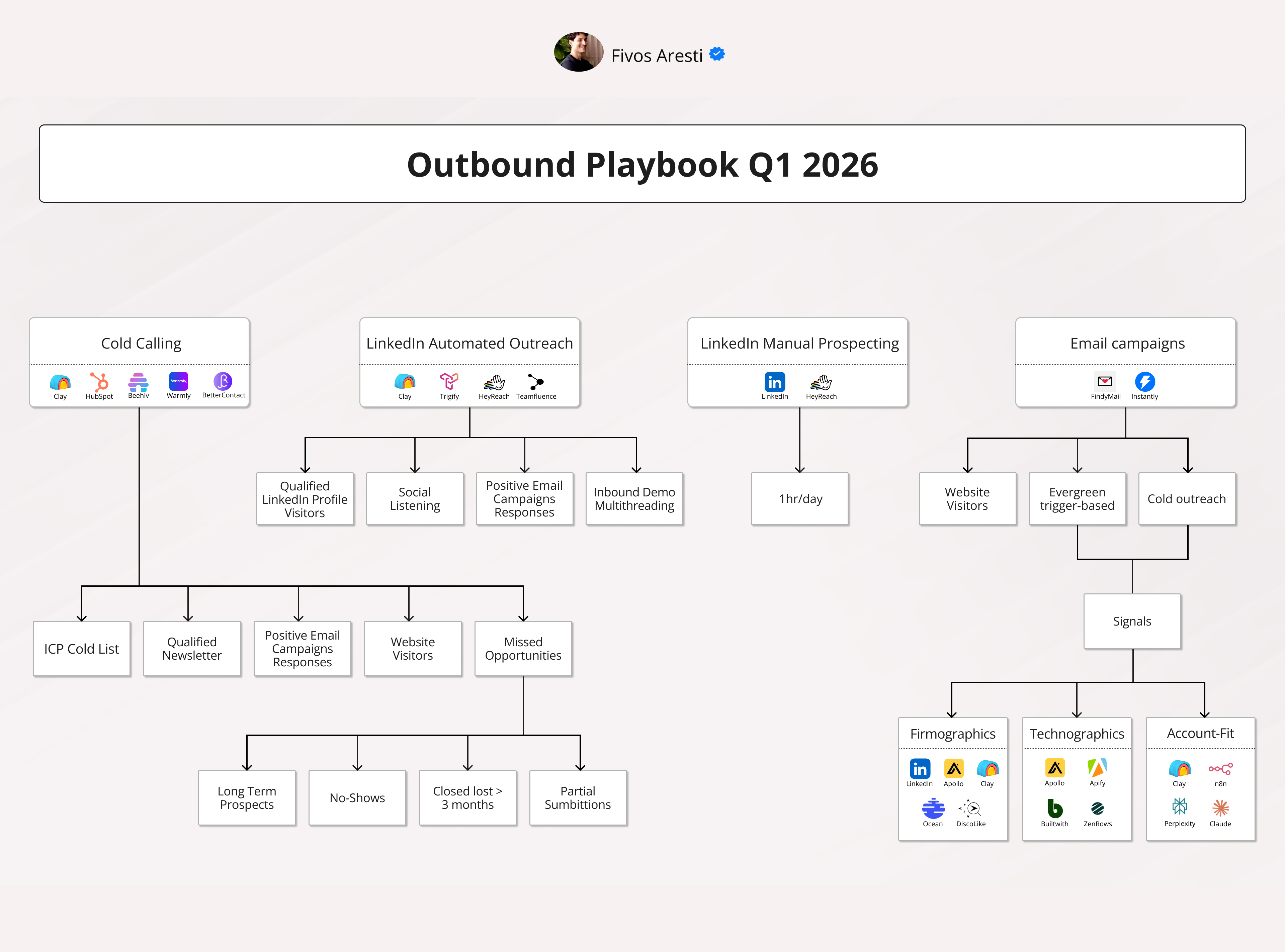
Each channel plays a different role.
Cold calling works best when an account already fits your ICP and timing matters. Email sequences help maintain consistent outreach across large segments of the market.
LinkedIn outreach works well when prospects have already interacted with your content.
Manual prospecting is reserved for the accounts that matter most.
The real challenge is deciding:
- when outreach should be signal-based vs cold
- when outreach should be automated vs personalised
Our outbound system balances both.
Manual outreach for ICP target accounts
Signal-based outreach performs well but only a small fraction of your target market shows buying signals at any given moment.
If you rely exclusively on signals, most of your addressable market remains untouched.
This is why we run continuous cold outreach to ICP accounts, while layering signal-based campaigns on top.
Step 1: Define the ICP and scoring model
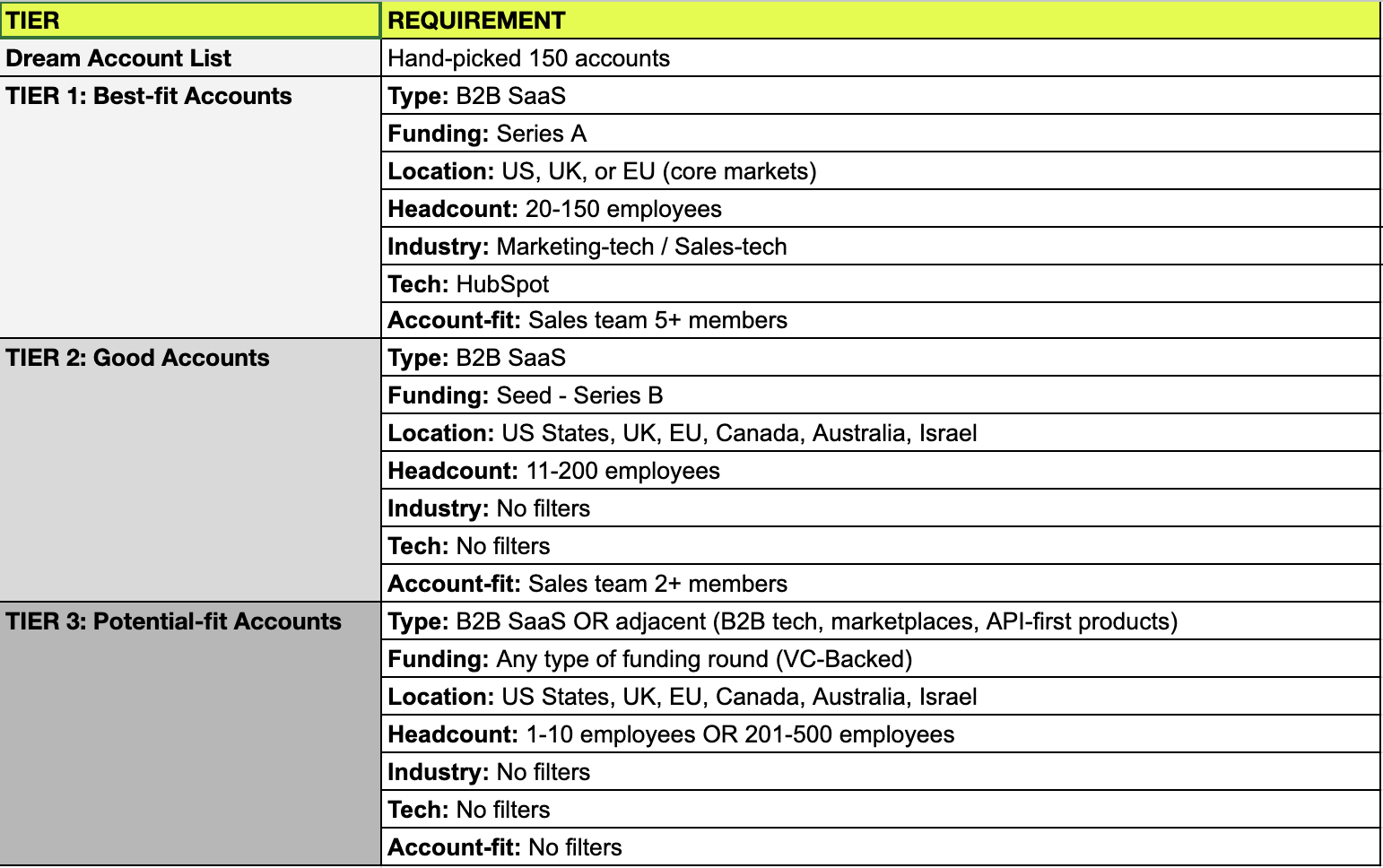
We built an ICP scoring model based on several attributes:
- company size
- location
- funding stage
- tech stack
- industry category
Each attribute contributed to an overall account fit score. Higher scores indicated companies more likely to benefit from our services.
Instead of treating every prospect equally, the score allowed us to prioritize outreach resources.
Step 2: Build the Total Addressable Market
Next we mapped our total addressable market (TAM).
We first created the broadest possible dataset of SaaS companies and filtered it later. This approach reduces the risk of excluding potential accounts because of incomplete database filters.
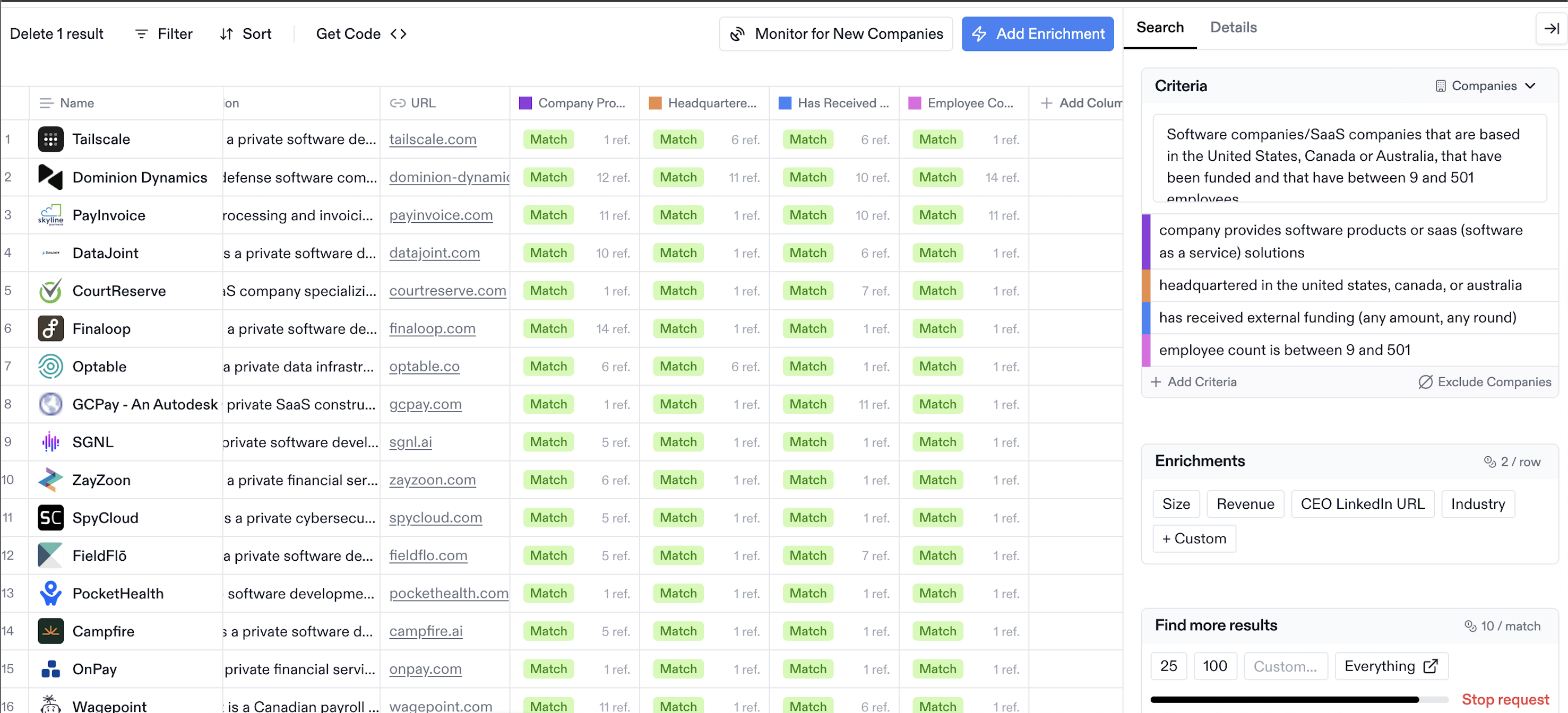
We combined data from several sources:
- BuiltWith to identify companies using HubSpot
- Crunchbase for funding data
- Apollo for firmographic data
- GetLatka to identify SaaS businesses
- Exa to crawl company websites using AI scraping
All datasets were uploaded into a single Clay table, where we normalized company names and removed duplicates.
This initial dataset contained ~66,000 companies.
However, many of these companies were not true SaaS businesses.
Step 3: Verify which companies were actually SaaS
To filter the dataset further, we used an AI research agent to review each company website and determine whether the business matched the SaaS model.
The agent looked for several signals:
- subscription pricing (monthly or annual plans)
- product feature pages describing software capabilities
- free trials or product demos
- screenshots of software dashboards
Companies without these indicators were removed.
This process reduced noise in the dataset and ensured we were targeting companies that actually sell software products.
Step 4: Apply Additional Qualification Filters
Once we verified which companies were SaaS businesses, we enriched the dataset with additional attributes:
- headcount (using Clay company enrichment)
- geographic location
- business model classification
- industry category
- technology stack (BuiltWith)
- funding data (Crunchbase)
For our outbound program we focused on VC-funded companies using HubSpot.
After applying those filters, the dataset shrank from 66,000 companies to 5,700 accounts.
These accounts were then scored using our ICP model and assigned to different tiers.
Step 5: Allocate Outreach by Account Tier
Not every account receives the same level of attention.
We divided our list into four tiers:
- Dream 150 → fully manual LinkedIn prospecting
- Tier 1 accounts → cold calling plus semi-automated sequences
- Tier 2 accounts → automated email and LinkedIn outreach
- Tier 3 accounts → automated email campaigns only
This structure allows our team to spend the most time on the accounts most likely to convert.
Step 6: Research Accounts for Personalization
Before launching campaigns, we gathered additional information about each account to improve personalization.
For every company we captured:
- the company’s ideal customer profile
- the types of data they would want to identify their own ICP
- LinkedIn posting activity
- the structure of their sales team
This research provided context for outreach messages and helped us tailor messaging to each segment.
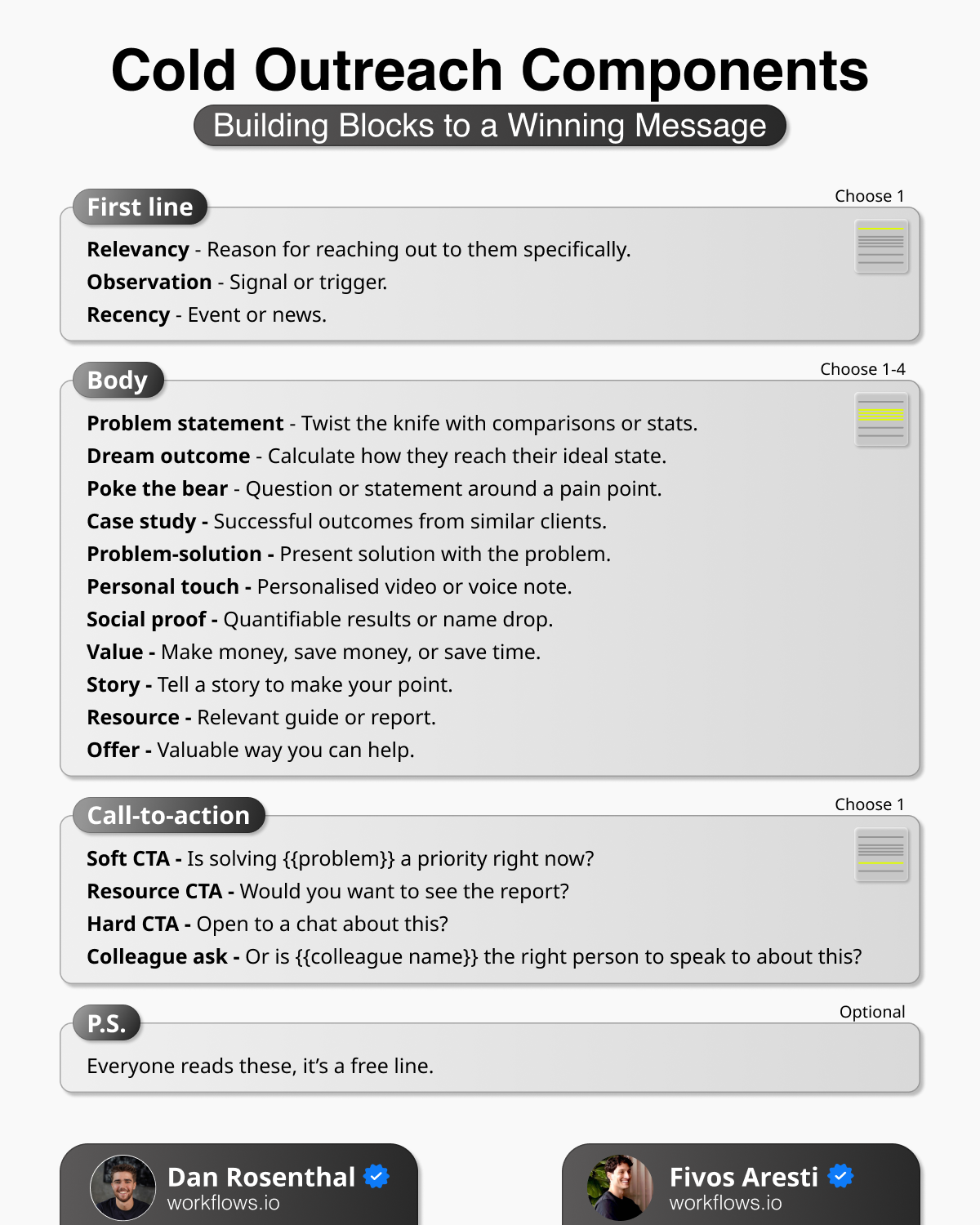
Step 7: Test Messaging Variations
Finally, we created several variations for each component of the outreach message:
- opening line
- core message
- call to action
Testing multiple variants allowed us to identify which messaging resonated most with each audience segment.
Step 8: Launch the Outbound Engine
Once messaging variants were ready, we launched campaigns across three primary channels:
- email sequences
- LinkedIn outreach
- cold calling for high-priority accounts
Each channel played a different role.
Email sequences provided scale. We could consistently reach thousands of prospects without manual effort.
LinkedIn outreach worked best for warmer prospects. When someone had seen our content before, messages felt more natural and conversations started more easily.
Cold calling was reserved for Tier 1 accounts where timing mattered. When a high-fit account visited the website or interacted with content, a phone call often produced faster responses than email.
Running these channels together created consistent exposure. Prospects might see a LinkedIn post, receive an email, and later get a message or call.
That repetition often triggered the response.
Automated Signal-Based Outbound
Cold outreach helped us cover the entire market. But signals helped us identify accounts that were already showing interest.
Signals matter because they indicate timing.
A company that downloaded a resource yesterday or engaged with your content this week is far more likely to respond than a completely cold prospect.
We tracked several categories of signals:
- website visits
- LinkedIn engagement
- founder connections
- job changes
- event attendance
- followers of competitor pages
These signals were collected and routed into Clay, where accounts were enriched and scored before entering outreach sequences.
Not every signal triggered outreach automatically. Many signals can be noisy. Someone might like a post without actually having buying intent.
To avoid spamming prospects, we used AI qualification inside Clay to confirm whether the account still matched our ICP before enrolling them in campaigns.
The Five Signal Plays that worked best
There are dozens of possible signal-based plays, but we focused on five that consistently produced replies.
1. Customer Alumni
When someone leaves a company that was previously a customer, they often bring the same tools and workflows to their new organization.
We exported closed-won accounts from HubSpot and used Clay to identify employees who had moved to new companies.
Those companies were then scored based on ICP fit. If the score was high, the contact entered a targeted outreach sequence.
This play worked well because the contact already understood the value of our work.
Tools used: HubSpot, Clay, Instantly, HeyReach.2. Website Visitors
Visitors to our website often included companies that matched our ICP.
Using Warmly, we identified companies visiting the site and enriched those accounts in Clay.
High-scoring accounts triggered immediate notifications in Slack so we could reach out quickly.
Lower-scoring accounts entered automated sequences.
This approach worked because it captured interest while it was still fresh.
Tools used: Warmly, Clay, Instantly, BetterContact.
.jpg)
2. Website Visitors
Visitors to our website often included companies that matched our ICP.
Using Warmly, we identified companies visiting the site and enriched those accounts in Clay.
High-scoring accounts triggered immediate notifications in Slack so we could reach out quickly.
Lower-scoring accounts entered automated sequences.
This approach worked because it captured interest while it was still fresh.
Tools used: Warmly, Clay, Instantly, BetterContact.
.jpg)
3. Founder LinkedIn Connections
Between me and my co-founder we had built a large LinkedIn audience over time: 65,000+ followers
Many of those connections were GTM leaders inside our target market.
Instead of treating them like cold prospects, we reached out conversationally.
Because these contacts had already seen our content, response rates were significantly higher than typical outbound.
.jpg)
4. Linkedin Engagement
We also tracked engagement on our posts.
Tools like Jungler and Teamfluence allowed us to identify:
- people liking posts
- people commenting
- profile visitors
Those contacts were enriched in Clay and routed into outreach sequences based on ICP score.
Someone who engages with your content has already demonstrated interest, which makes the first message much easier.
.jpg)
5. Social Listening
Finally, we monitored LinkedIn conversations for specific keywords related to our product.
When prospects interacted with posts mentioning those keywords, Clay captured the data and enriched the accounts automatically.
If the account matched our ICP, the contact entered a targeted outreach campaign.
This play helped us discover prospects who were already discussing relevant problems.
.jpg)
Signal-based campaigns consistently outperformed cold outreach.
Depending on the signal, reply rates were 2x to 10x higher than standard outbound campaigns.
Our best-performing play was Founder LinkedIn Connections, which reached a 25.4% reply rate in early campaigns.
That result was not accidental.
It came from more than a year of consistent LinkedIn posting that built familiarity with our audience. By the time outreach started, many prospects already recognized our names.
This highlights an important lesson about signals.
The strongest signals often come from your own marketing activity.
Content creates attention. Signals capture that attention. Outbound converts it into conversations.
Conclusion
Looking ahead, we plan to invest more heavily in high-touch outreach for Tier 1 accounts.
Automation will continue to power research and signal tracking. It helps us identify the right companies, monitor buying signals, and run outreach at scale.
But the most valuable accounts still benefit from human attention. Personal research, thoughtful messaging, and direct conversations often make the difference when working with high-value prospects.
The teams that win in modern outbound are not the ones trying to automate everything.
They are the ones that combine automation for scale with manual effort where it matters most.
If you’re looking to build a similar GTM system, here are a few resources that might help:
Book a call with our team: getstarted.workflows.io
Explore our GTM workflows: workflows.io/workflows
Try our LinkedIn Previewer: workflows.io/linkedin-preview
Follow along as we share new GTM experiments and playbooks: newsletter.workflows.io